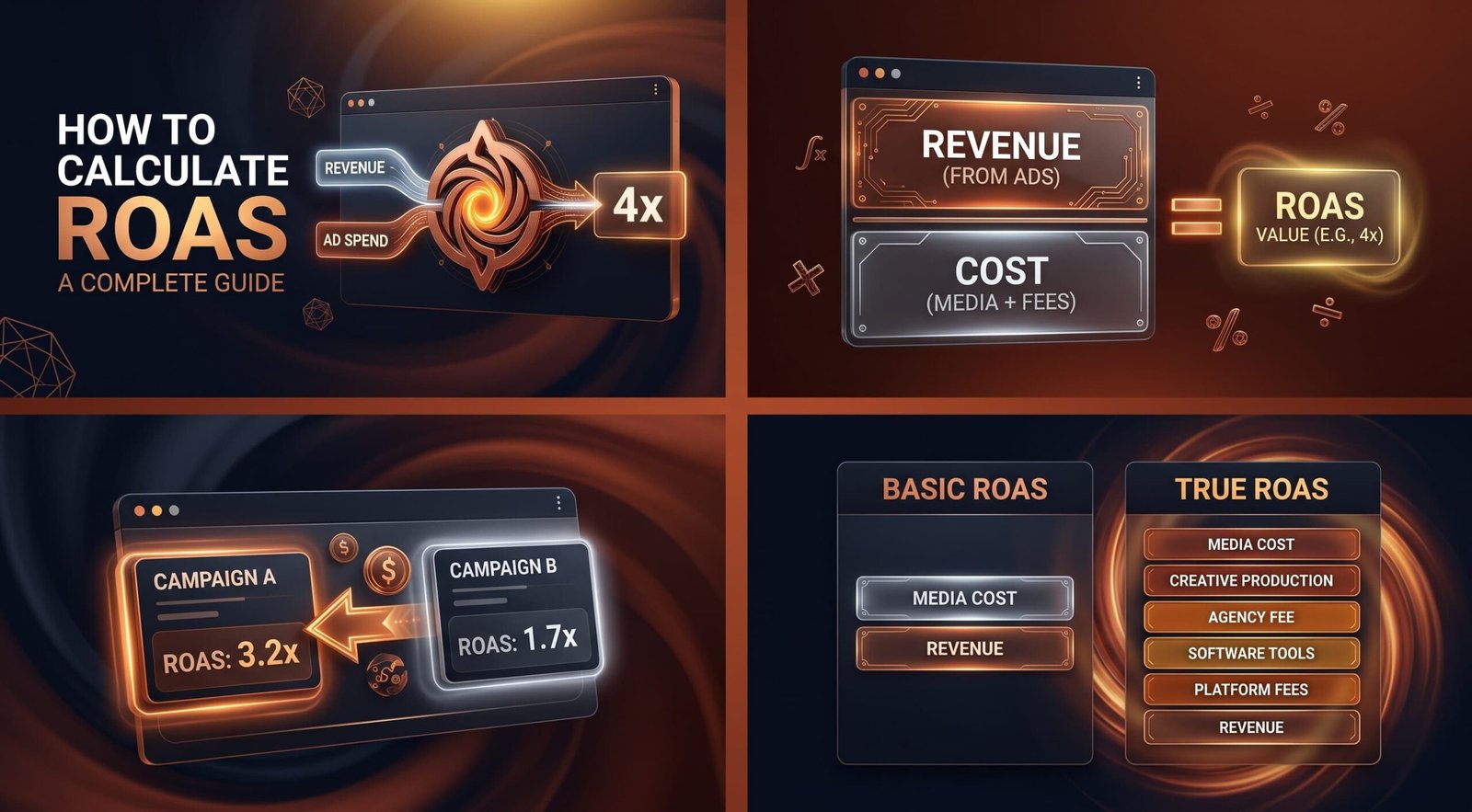
How to Get Cited by ChatGPT and Perplexity (2026 Guide)
Learn how to get cited by ChatGPT, Perplexity and Google AI Overviews. A practical 2026 guide to generative engine optimization that wins AI referrals.
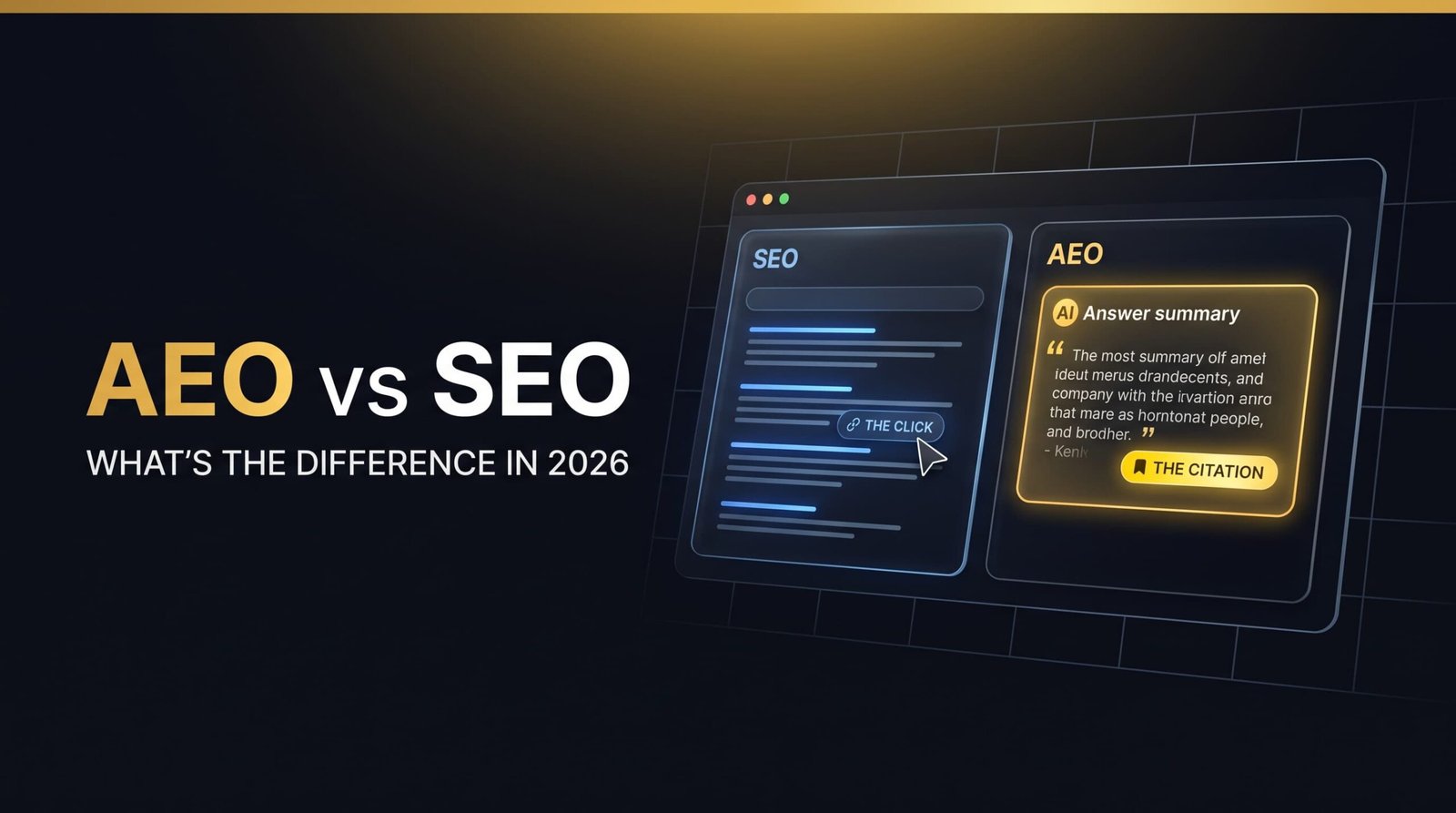
AEO vs SEO explained: the real difference between answer engine optimization and search engine optimization, and how to use both to win traffic in 2026.

What is webMCP? A clear 2026 guide to the Web Model Context Protocol: how it works, webMCP vs MCP, its status, and how to get your website ready for AI agents.
Add an AI chatbot to WordPress without a plugin subscription. Three free methods, real 2026 costs, and a step-by-step guide — no monthly fee required.

How much does Shopify Plus cost? $2,300/month base, $5,000–$25,000 all-in — plus the revenue level where it actually pays for itself. Real 2026 breakdown.

How much does a website cost for a small business? Real 2026 ranges — $3,000–$10,000 to build, plus the 3-year cost most agencies never quote you upfront.
Is SEO worth it for small business? Honest 2026 answer with real ROI data — plus when it’s genuinely a waste of money and when to run ads instead.
Web design agency vs freelancer: it’s about risk, not price. Real 2026 cost ranges, the single-point-of-failure problem, and the middle path nobody mentions.
WordPress vs custom development: one question decides it. Real cost ranges ($2k–$60k+), the admin panel nobody budgets, and which limitations are actually real.
Laravel vs WordPress: How to Pick the Right Backend (Without Regretting It in Year Two) Laravel vs WordPress comes down to one question: is your site mostly content or mostly logic? Muhammad Umer Web Development Lead · Jul 16, 2026 · 8 min read Short answer Pick WordPress if your site is mostly content — pages, posts, services, a blog your marketing team updates. Pick Laravel if your site is mostly logic — user accounts, custom workflows, dashboards, calculations, things that don’t exist as a plugin. WordPress builds run $2,000–$8,000 in 4–6 weeks. Laravel builds run $15,000–$60,000+ over 3–6 months. If you’re genuinely torn between them, you almost certainly want WordPress — because the people who need Laravel usually already know it. The one question that decides it Write down what your site actually does. Then sort every item into two buckets: Bucket A — Content. Pages. Blog posts. Service descriptions. A team page. Case studies. Contact forms. Anything where the site’s job is to show something. Bucket B — Logic. Users log in and see different things. Something gets calculated. Data flows between systems. There’s a workflow with states. Someone has a dashboard. Now look at the split. 90% Bucket A? WordPress. Don’t overthink it. Mostly Bucket B? Laravel. Genuinely both? Keep reading — there’s a third answer. That’s it. That’s the decision. Everything below is just detail on why. Where WordPress actually wins Your team can edit it without calling you. This is underrated to the point of absurdity. WordPress ships with an admin panel that a marketing coordinator can use on day one. In Laravel, there is no admin panel — you build one, or you bolt on a tool to generate one. That’s real money and real time, and it’s the single most common thing that blindsides people who choose Laravel for a content site. The ecosystem already solved your problem. Contact forms, SEO metadata, caching, backups, multilingual, memberships, e-commerce — all exist, all mature, all cheap. In Laravel you write it or you find a package and maintain the integration yourself. Most slow Elementor sites aren’t slow because of Elementor. They’re slow because of twelve plugins doing what three could do. SEO infrastructure comes free. Rank Math or Yoast gives you sitemaps, schema, canonical tags, meta management, breadcrumbs, redirects — configured in an afternoon. On Laravel you build every one of those by hand. They’re not hard individually. There are just a lot of them, and teams forget half until traffic doesn’t show up. It’s cheaper to hire for. WordPress developers are everywhere. Good Laravel developers cost meaningfully more and are harder to replace. If your dev disappears, WordPress means a week of searching. Laravel can mean a month. Where Laravel actually wins When your logic doesn’t exist as a plugin. Multi-tenant SaaS. A marketplace with escrow. A booking engine with real availability rules and conflict resolution. An internal tool that talks to three APIs and your ERP. Try forcing these into WordPress and you end up with a Frankenstein of six plugins fighting each other, plus custom code holding it together, plus a rebuild in two years. When you actually own the code. No plugin author abandoning a critical dependency. No breaking change from an update you didn’t ask for. No mystery about why something behaves the way it does. You wrote it, so it does what you wrote. Security surface. Most WordPress hacks aren’t WordPress — they’re a plugin nobody updated. Laravel has a much smaller attack surface simply because there’s less third-party code. But be honest about the flip side: WordPress security is maintained by other people. Laravel security is maintained by you, forever. That’s not automatically a win, it’s a transfer of responsibility. Performance ceiling. A tuned Laravel app will beat a tuned WordPress site. Not by a little, either, once you’re past simple pages. But most sites never get near the ceiling where this matters — and a slow site is usually slow for boring reasons, not framework reasons. The honest cost picture Rough ranges for a US-market build: WordPress Laravel Build $2,000–$8,000 $15,000–$60,000+ Timeline 4–6 weeks 3–6 months Admin panel Included You build it ($3k–$10k) SEO tooling Plugin, ~$60/yr Built by hand ($2k–$5k) Content edits Your team, free Your team, if you built the panel Monthly upkeep $50–$300 $500–$2,500 (needs an actual dev) Replacing your dev A week A month, and more expensive Look at that last row for a minute. A Laravel app without a developer on retainer is a liability, not an asset. Dependencies age. Security patches land. PHP versions get deprecated. If you can’t commit to that ongoing relationship, you shouldn’t start. WordPress rots more gracefully. Neglect it for a year and you have an outdated site with some risk. Neglect a Laravel app for a year and you may have something nobody wants to touch. The cost nobody quotes you WordPress developers are everywhere. Good Laravel developers cost meaningfully more and are harder to replace. If your dev disappears, WordPress means a week of searching. Laravel can mean a month The third answer nobody offers you Headless WordPress + a custom frontend. WordPress runs behind the scenes purely as a content store — your team edits in the admin they already know. A custom frontend (React, Next.js, or a Laravel app) consumes it via API and renders whatever you want, however fast you want. You get: familiar editing, custom application logic, and a performance ceiling that’s nowhere near WordPress’s. You pay: two systems instead of one, more moving parts, and it costs more than plain WordPress. This is genuinely the right answer more often than the industry admits — specifically when you have a marketing team that publishes constantly and real application logic. Most agencies won’t propose it because it’s harder to scope and sell than “we’ll build you a WordPress site.” The mistakes we see most Choosing Laravel because WordPress feels unserious. This is an ego decision dressed up as a technical one.